
During the 16th and 17th centuries, an estimated 4,000 people, a majority of those being women, were accused of committing witchcraft in Scotland—an accusation punishable by death. Hannah Johnson and Elise Ryan, both professors in the Department of English at the Dietrich School, explored this darker history through “Magic & Witchcraft in Scotland,” a four-week summer study-abroad intensive in Edinburgh.
Upon arriving in Scotland, students stayed on campus at Heriot-Watt University. Three of the four weeks were spent in Edinburgh with one week reserved for travel. During that travel week, they made stops in Glasgow and some smaller towns and participated in hikes, tours, and guest lectures. One of the first guest lecturers they met was University of Edinburgh Professor Ewan McAndrew. McAndrew, along with students at the University created the map of accused witches.
Ellie Kannel, an English Literature and Museum Studies major, said while she loved exploring Edinburgh and Glasgow, the small towns they saw offered a different perspective.
“Seeing those smaller areas where it was more sort of intimate and you could see the history of the people of Scotland a little more, in a more concentrated way, was really interesting to me,” she said
The program consists of two courses: Magical Nature Before the Modern World, taught by Johnson; and Writing Place, a writing-intensive course taught by Ryan that also counts toward a professional writing certificate. Johnson’s course focuses on the history of the witchcraft trials and charm literature; in contrast, Ryan’s focuses more on immersing students in these environments to fully appreciate the history they were learning.
A creative writing workshop led by author Marielle Thompson, who writes historical fiction mainly centered on the witch trials, encouraged students to use creative writing to modernize historical fiction so that it relates to current worldviews while underlining the importance of the history.
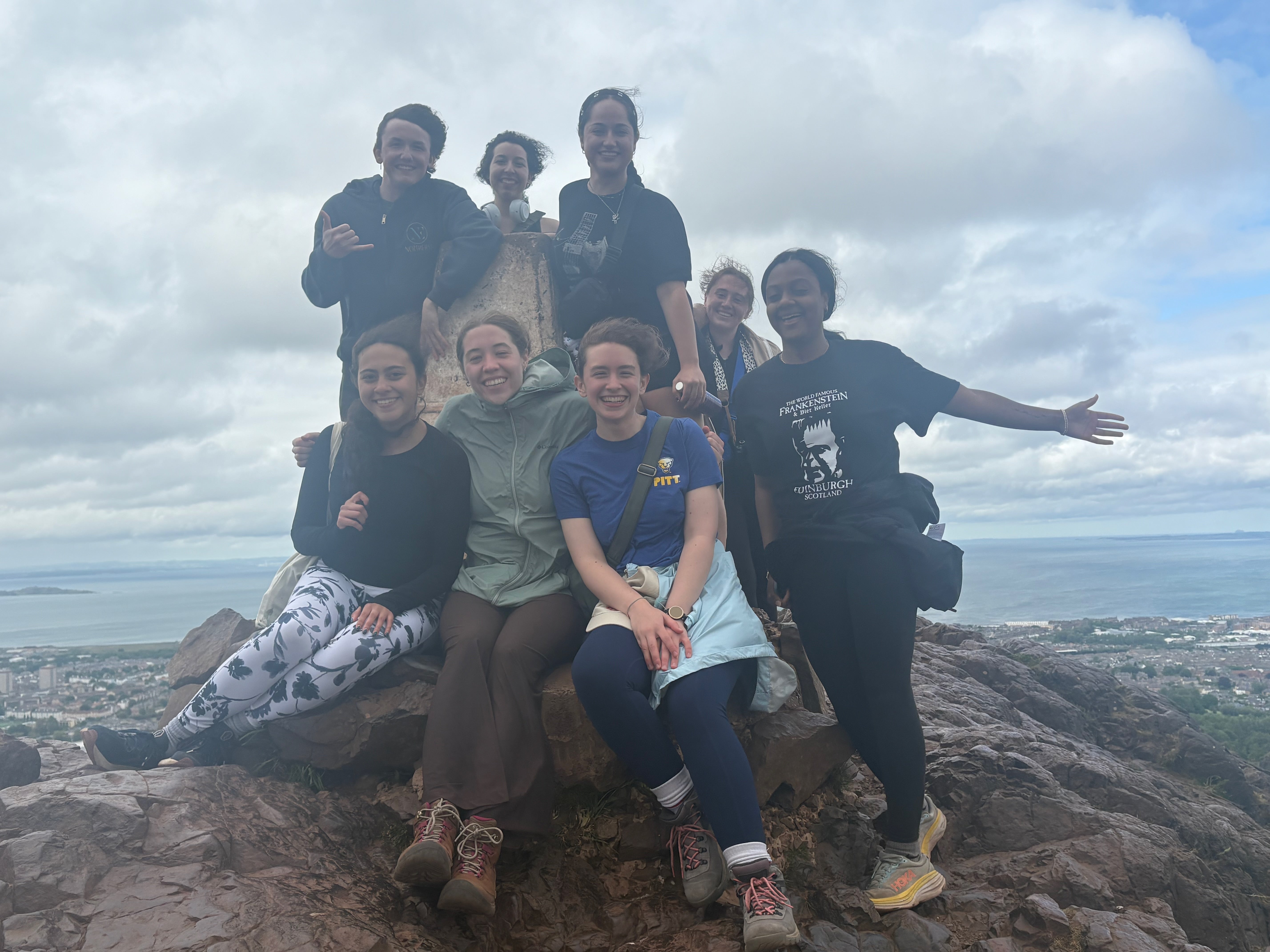
The hiking portion of the visit included seeing monuments along a trail in Fife, visiting the only known burial of an accused witch: Lilias Adie’s Grave, hiking up to Arthur’s Seat, visiting Inchcolm Island, and walking along the banks of the Leith. Along the Leith Waters walkway, the students engaged in a Soundwalk, moving through nature and focusing solely on the sounds around them to help them relearn the space through sound. From there, Ryan encouraged students to find a quiet space outside of the hike to reflect and write about their experiences.
“Often what makes a place is memory, emotion, sensory engagement. So, we really focused on those aspects: people and accused women. What does writing about place look like if it is a public memorial? What does writing about place look like if it is travel writing? Like tourist guides. What does writing about place look like with something that's supposed to be, or is, understood as neutral, like map making, but is really not?”

Johnson says there's been a real movement in Scotland to document more of these cases and bring more attention to them.
They visited Maggie’s Wall Monument in Dunning and talked to members of Remembering the Accused Witches of Scotland (also known as RAWS) to hear how they are advocating for acknowledgment of these atrocities. In 2022, the group worked with the government and the Church of Scotland to secure formal apologies from both parties for their part in the trials.
One of the guest lecturers students interacted with was Comedian Susan Morrison, and Dr. Louise Yeoman, both hosts of the BBC Radio 4 podcast “Witch Hunt.” Their podcast explores how fear, power, and people’s beliefs of the time led to the perfect storm of accusations and executions.
Throughout the trip, students focused on creating their own charm books comprised of 10 chapters: A Charm to Begin the Journey, ‘My Magical Landscape’ Personal Narrative of Place, 3 Picture Story, Charm Walk Brochure, Travel Site Description of a Memorial Site or of an Accused Woman, Filling Out the Picture (Based on Isobel Gowdie), Found Poem, Adjusted/Altered Map, Charm to Return Home, and Reflection. For a more in-depth look at some of the work these students did, you can take a peek at Kannel’s charm book here.
This is the first time this program has been available to students, and Johnson says they plan on offering it every other summer for the foreseeable future.
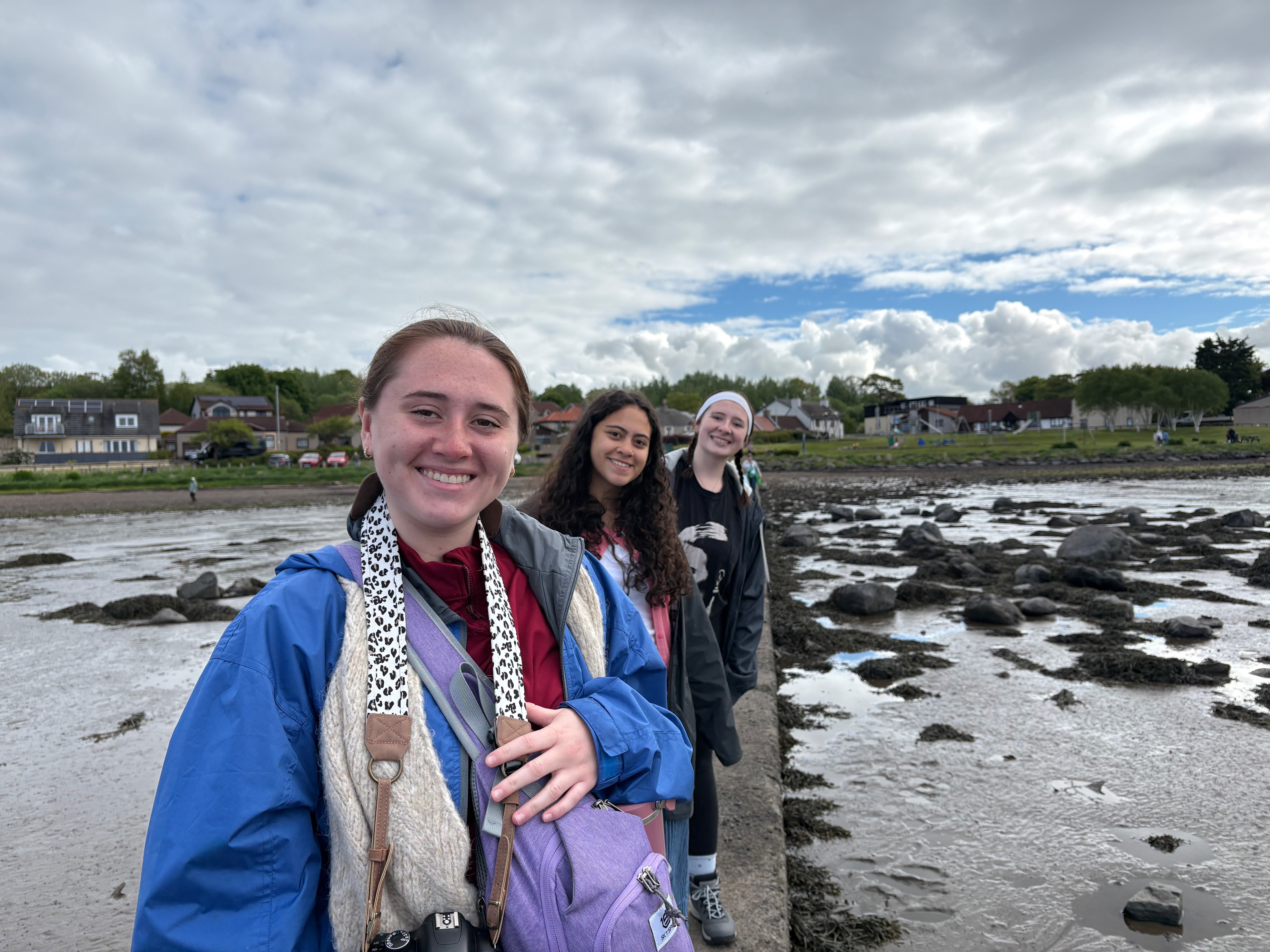
Kannel said the experience taught her a lot, and she was happy she had the opportunity to do it.
“I think doing it through the school and through a program like this was a really great experience because of the sort of structure we had and the end goal of working towards a project […] also being with professors from Pitt and being surrounded by students too from Pittsburgh was also really comforting as a first time out of the country. But yeah, the program itself was an amazing experience.”
For more information about the study abroad program, you can visit their website.