
Healing by Design: Virtual Spaces for Black Collective Healing and Wellbeing, a Digital Research Wall exhibit showcasing immersive VR environments, opened at the Hillman Library.
The Digital Exhibit, located on the library's first floor, is the brainchild of Kamesha Spates, the William S. Dietrich II Chair & Associate Professor & Director of Graduate Studies in the Department of Africana Studies. Spates, in collaboration with Molly Ritter and Dan Kapel at Open Lab in the Hillman Library, taught Spates’s students how to create virtual spaces based on their research into Black mental health.
“So, I have been researching some facet of mental health in the black community for the last two decades. During this time, I've had the privilege of speaking with both community members and clinicians, and I began to see the very subtle ways that healthcare systems can begin to communicate with black Americans that we value the cultural Wisdom that you already embody concerning your physical and emotional well-being. And I started to consider ways to translate that culturally specific knowledge into actions. This exhibit is a byproduct of this. There are steps, loosely defined, that you can take to guide students through the process of finding the scholarly information that centers Black healing traditions in clinical spaces and beyond."
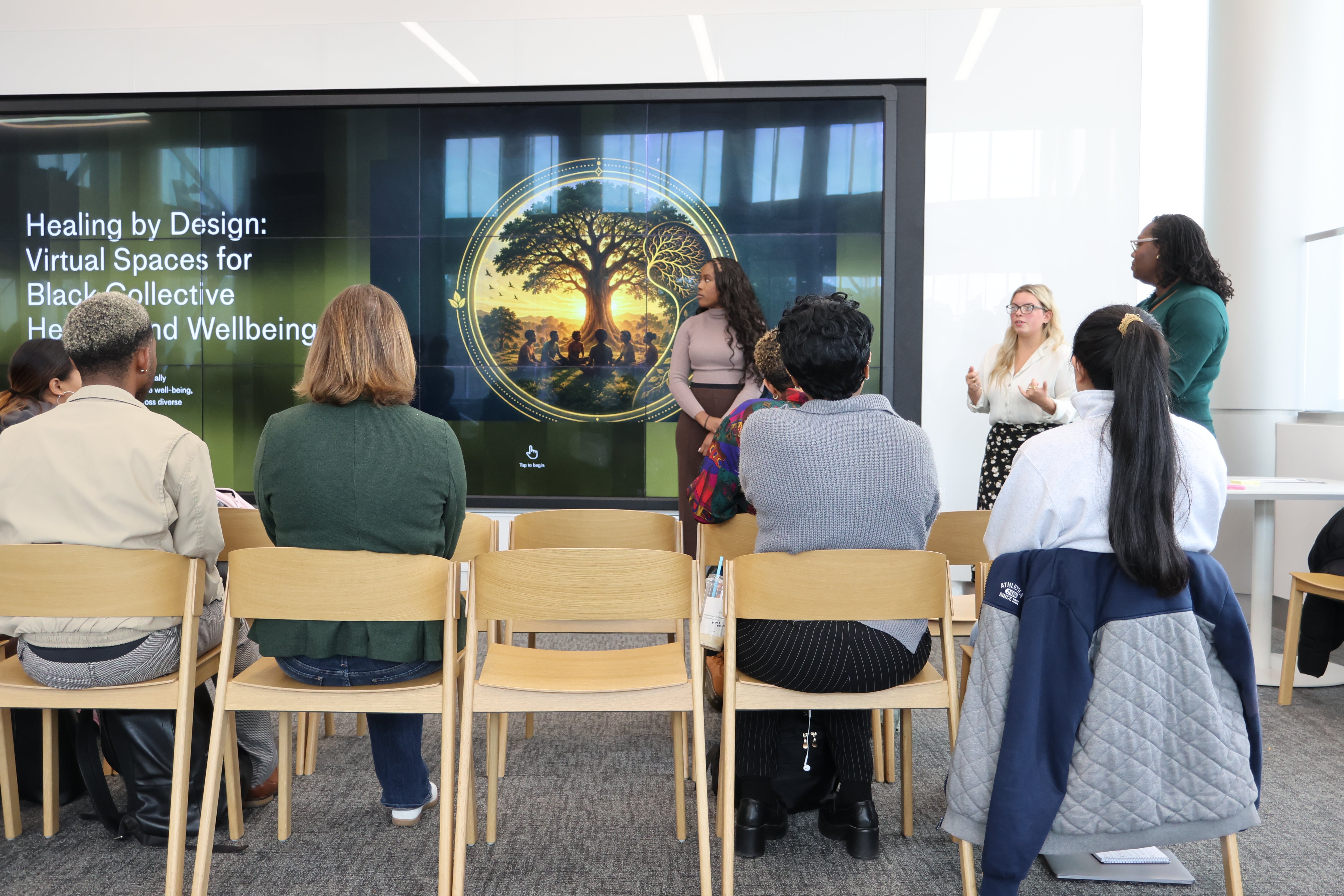
Six of Spates’s research students took part in the exhibit, which showcases culturally affirming spaces designed to foster healing, belonging, identity, mental wellness, and community. There are six “environments” viewers can explore. Each environment focuses on specific aspects of Black wellbeing and reflects the researchers' personal ties.
“They were instructed to select a group, followed by a subgroup. For example, I shared with a student that creating a space for Black men as a group is too broad. They are not a homogeneous group. So that is how Glen, for instance, said, ‘Okay, I'm a father, and I am concerned about depression among young black male fathers.’ So, he took it a step further. He wanted to look at men between the ages of 20 and 30, when you're more likely to be a father of young children in many cases. He wanted to combat the fact that there are stereotypes that black men are not present in their children's lives, and that there are spaces where they can go to connect and build community while promoting their mental well-being, and that they're not alone.”
Three Dietrich Students were part of the exhibit: Glen Almon and Kimberly Okeke, both Doctoral students in the Department of Africana Studies, and Higgins Joseph, a former Fulbright Scholar with the Center for African American Poetry and Poetics.
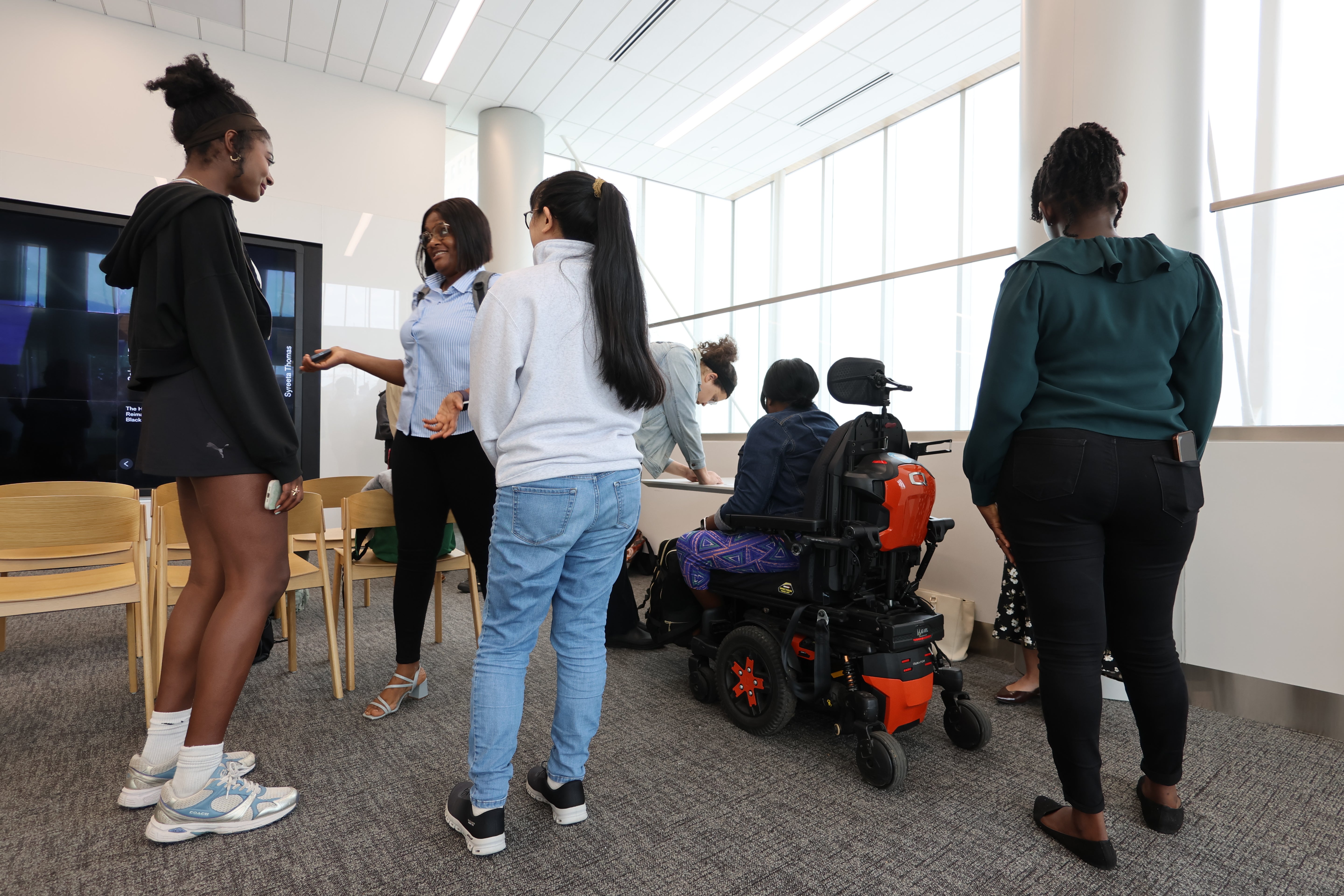
Spates also hopes to create a more interdisciplinary curriculum utilizing a similar project to the digital wellbeing spaces.
“The curriculum would serve practicing mental health clinicians, medical students, community health workers, and others aiming to promote mental well-being among Black Americans. I argue that healing spaces can and should extend beyond the clinical setting. This is especially important for a healthcare system striving to build trust with a group that has endured centuries of harm by the field.”
The exhibit will be up through February.